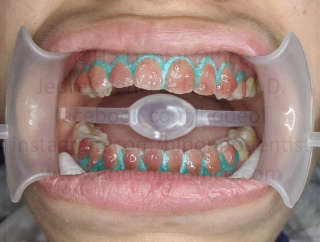
Orthodontics (braces)
Orthodontics is the field of dentistry concerned with the alignment of teeth in order to obtain optimal functioning.
We have linked articles for some of these procedures denoted by a , be sure to click and read them too!
To see some of the orthodontics cases we've treated in the past, please check out our Dental Gallery.
Typical Appliances Used in Orthodontics
- Conventional Braces (Metal or ceramic appliances fixed to the teeth)
- Self-Ligating Braces (Also available as metal or ceramic)
- Retainers – for orthodontic treatment graduates only! (Includes Hawley retainers. 'invisible' Essix retainers, or fixed lingual retainers)
- Aligners (Removable clear aligner systems)
- Temporary Anchorage Device / Orthodontic Implants
Typical Cases Encountered in Orthodontics
- Crowding (When there is insufficient space for teeth to come out properly)
- Open Bite (Occurs when the front teeth do not occlude with each other when closed)
- Deep Bite (Also known as excessive overbite, where upper teeth overlap lower teeth too much)
- Underbite (Occurs when the lower jaw overlaps the upper teeth when closed)
- Occlusal Canting (An uneven plane of occlusion between the left and right sides of the mouth)
FAQs on orthodontics
What is Orthodontics?
Orthodontics is the field of dentistry concerned with the alignment of teeth in order to obtain optimal functioning. It aims not only for cosmetic improvements but also for proper bite mechanics and overall dental health.
What are braces? Are there different kinds of braces available?
Braces are appliances (either made from metal or ceramic) fixed onto the teeth to facilitate fixed orthodontic treatment. They work by applying gentle, consistent pressure over time, guiding teeth into their optimal position.
Types: We offer conventional braces and self-ligating braces. Additionally, retainers (Hawley, 'invisible' Essix, lingual retainers) are used after treatment to prevent relapse.
How do braces actually work?
The process starts with a U-shaped archwire conforming to your ideal dental arch that are attached onto the braces, which are secured using ligatures (rubber or metal). The teeth move by gradually adapting to the shape of the wires. Throughout treatment, we transition through different wire sizes—starting from flexible/soft wires and progressing to harder wires toward the end of treatment.
Are retainers necessary after braces are removed?
Yes, they are crucial. Retainers (which can be fixed lingual wires or removable appliances) minimize relapse by holding your aligned teeth.
What is relapse? Is it preventable?
When the braces come off, teeth naturally have a tendency to shift back to their original position because of the muscle memory of the periodontal fibers suspending teeth onto the bone. This is called relapse. While there is no guarantee to prevent it from happening, there are ways to neutralize its effect. Aside from Retainer wear, we also strongly recommend to remove Third Molars / Wisdom Teeth or other supernumerary teeth in order to avoid further crowding an already crowded dental arch.
How long does orthodontic treatment take, and at what age should I consider it?
The average treatment time for fixed orthodontics is typically 2–3 years, but this varies significantly based on the complexity of your case (simpler cases = faster). As for the age, ideally, treatment begins when most permanent teeth have matured (around 11–13 years old or during adolescence). This allows us to correct issues coinciding during the child's peak development period. For younger patients, we would recommend Functional Appliances before proceeding on to fixed orthodontic treatment, if needed.
Want to know more about orthodontic treatment? Check out these other resources:
WebMD - Dental braces - https://www.webmd.com/oral-health/guide/braces-and-retainers